Swimming pools have evolved far beyond simple recreational spaces and are now considered essential features in hospitality, sports, residential, and commercial developments. Modern aquatic facilities are designed according to specific operational goals, user requirements, and industry standards. Among the most popular categories are commercial swimming pools and Olympic swimming pools, both of which serve entirely different purposes despite sharing similar structural foundations. Commercial pools are mainly designed for relaxation, entertainment, fitness, and business-oriented environments, while Olympic pools are engineered for professional sports competitions and athlete training. The increasing demand for high-quality swimming facilities has encouraged developers, hotels, sports organizations, and educational institutions to invest in advanced pool construction services.
Understanding Commercial Swimming Pool Services
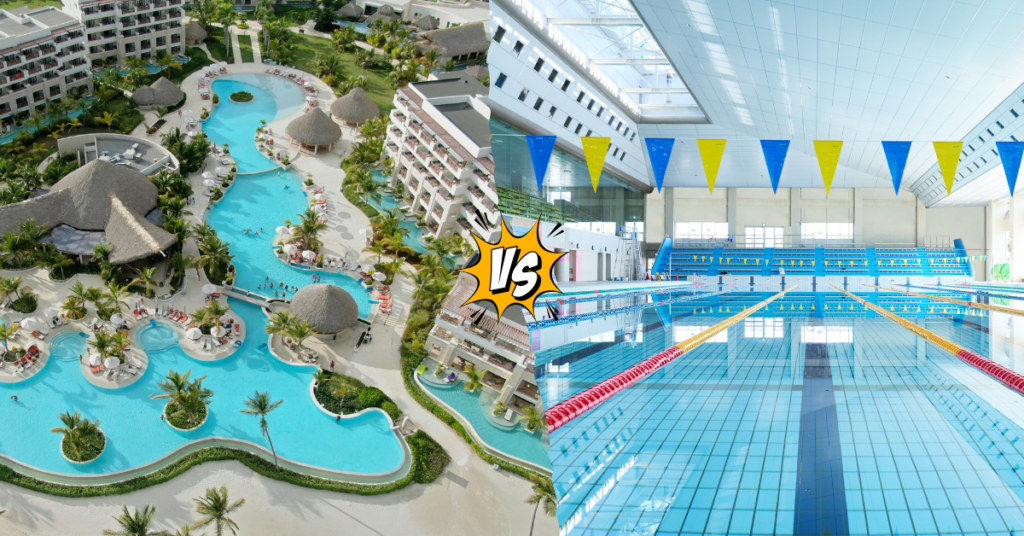
Commercial swimming pools are designed for public or semi-public use in places where recreation, relaxation, and entertainment are major priorities. These pools are commonly installed in hotels, resorts, residential communities, fitness clubs, educational institutions, and water parks. Unlike competition-focused aquatic facilities, commercial pools emphasize comfort, aesthetics, and user-friendly experiences.
Their designs often include decorative elements such as waterfalls, infinity edges, mosaic tile finishes, underwater lighting systems, and integrated spa areas to create visually appealing environments. Commercial pool construction services typically include complete project planning, excavation, waterproofing, filtration system installation, tiling, lighting integration, and maintenance solutions. The dimensions and layouts of these pools vary according to available space and intended usage.
Some commercial pools are built primarily for leisure swimming, while others focus on fitness activities or family entertainment. Safety features such as anti-slip surfaces, pool fencing, and water sanitation systems are also essential components of commercial pool projects. Modern commercial swimming pools are increasingly integrating energy-efficient pumps, automated cleaning systems, and eco-friendly filtration technologies to reduce operational costs and improve sustainability.
Common Targeted Areas for Commercial Pools
- Hotels and resorts
- Residential housing societies
- Rooftop recreational spaces
- Luxury villas
- Water parks
- Schools and colleges
- Fitness clubs and gyms
- Commercial entertainment facilities
What Are Olympic Swimming Pool Services?
Olympic swimming pools are professionally engineered aquatic facilities designed specifically for competitive sports and professional athlete training. These pools must comply with strict international standards regarding dimensions, lane markings, depth, water circulation, and competition infrastructure. Olympic pools are mainly constructed for sports complexes, universities, athletic academies, and international aquatic events where performance accuracy and technical precision are essential.
An Olympic-size swimming pool is generally 50 meters long and 25 meters wide, with multiple competition lanes and advanced wave-reduction systems. Unlike commercial pools, Olympic facilities focus entirely on functionality rather than decorative aesthetics. These pools require specialized engineering systems such as precision timing technology, professional diving sections, lane dividers, and high-capacity water filtration equipment. Water temperature and quality must also be carefully regulated to maintain ideal competition conditions for athletes.
Pool Size and Structural Differences
The size and structural design of a swimming pool play a major role in determining its functionality, construction complexity, and maintenance requirements. Commercial and Olympic swimming pools differ significantly in dimensions, layout flexibility, and engineering standards because they are designed for completely different purposes. While commercial pools focus on recreation and aesthetics, Olympic pools are built according to strict international competition requirements.
- Commercial swimming pools offer flexible dimensions and customized layouts based on property requirements.
- Hotel and resort pools often include curved designs, shallow zones, and decorative features for guest comfort.
- Residential pools are commonly designed for leisure activities, family recreation, and light fitness use.
- Olympic swimming pools follow standardized international dimensions for professional competitions.
- The large size of Olympic pools supports athlete training and competitive aquatic events.
- Olympic facilities require deeper water levels and advanced circulation systems for proper water movement.
- Greater structural support and technical engineering are necessary for Olympic pool construction projects.
Construction and Installation Requirements
Swimming pool construction requires careful planning, quality materials, and professional engineering expertise. However, the complexity of construction varies greatly between commercial and Olympic pools. Commercial pool projects generally focus on visual aesthetics, user safety, waterproofing, and efficient filtration systems. Decorative features such as mosaic tile work, LED lighting, waterfalls, and spa integrations are commonly included to enhance luxury appeal.
Construction timelines for commercial pools are usually shorter because their technical requirements are less demanding. Olympic pool construction involves far more advanced engineering and precision-based installation methods. Professional contractors must ensure exact lane measurements, proper water depth, and compliance with international aquatic standards.
Specialized systems such as wave-reducing gutters, anti-turbulence lane dividers, and automated timing equipment are essential for competition-ready facilities. Waterproofing quality is also more critical because Olympic pools hold significantly larger water volumes. Companies such as Atlantic Group understand the importance of combining structural durability with advanced aquatic engineering to deliver reliable swimming pool solutions for large-scale projects.
Read more: Sports Complex Construction Essentials for Long-Term Success
Important Construction Features
- Waterproofing systems
- Advanced filtration technology
- Pool lighting integration
- Slip-resistant surfaces
- Energy-efficient pumps
- Professional drainage systems
- Automated cleaning equipment
- Durable mosaic tile finishes
Cost Factors in Commercial and Olympic Pools
Commercial Pool Construction Cost
Commercial swimming pools are generally more affordable and flexible in terms of budget. The overall cost depends on pool size, design style, finishing materials, and added luxury features like waterfalls or lighting systems.
Olympic Pool Construction Cost
Olympic swimming pools require significantly larger investments due to their international-standard dimensions and advanced engineering systems. Professional lane setups, timing systems, and high-capacity filtration increase construction expenses.
Equipment and Technology Costs
Both pool types require filtration systems, pumps, heating units, and waterproofing solutions. However, Olympic pools use more advanced technology and professional-grade equipment for competition standards.
Maintenance and Operational Expenses
Commercial pools usually involve moderate maintenance costs, while Olympic pools require continuous water quality monitoring, technical inspections, and higher utility consumption because of their large size.
Uses and Functional Applications
Commercial and Olympic swimming pools are developed for entirely different operational purposes. Commercial pools mainly focus on leisure, entertainment, and hospitality experiences. Hotels and resorts use swimming pool projects to enhance guest satisfaction and property value, while residential communities incorporate pools as premium lifestyle amenities. Fitness centers and educational institutions also use commercial pools for exercise programs, swimming lessons, and recreational activities.
Olympic swimming pools are designed specifically for professional sports environments. These facilities support athlete training, national and international swimming competitions, diving events, and aquatic sports programs. Universities and sports academies frequently invest in Olympic pools to provide high-level athletic training opportunities. Because of their strict design standards and large dimensions, Olympic facilities are not commonly used for casual recreational swimming. Their primary purpose remains competitive sports performance and professional aquatic development.
Rules and Safety Standards
Swimming pool safety and regulatory compliance are essential for both commercial and Olympic aquatic facilities. Commercial pools must follow local health and safety regulations regarding water sanitation, anti-slip flooring, fencing, emergency exits, and filtration standards. These regulations help ensure safe recreational use for guests, families, and public visitors. Olympic pools are governed by much stricter international standards established by professional aquatic organizations.
Every aspect of the facility, including pool dimensions, lane markings, lighting quality, water temperature, and circulation systems, must meet competition-approved specifications. Even small construction errors can affect athlete performance and event eligibility. Regular inspections and professional maintenance are necessary to maintain compliance with these regulations. Atlantic Group continues to support high-quality aquatic development through professional planning, engineering precision, and modern construction techniques.
Comparison Between Commercial and Olympic Pools
| Feature | Commercial Pool | Olympic Pool |
| Main Purpose | Recreation & hospitality | Professional competitions |
| Pool Size | Flexible dimensions | Standardized 50m × 25m |
| Design Focus | Luxury & aesthetics | Performance & precision |
| Construction Cost | Moderate to high | Very high |
| Maintenance Level | Standard commercial | Advanced professional |
| Typical Locations | Hotels, resorts, societies | Sports complexes, stadiums |
| User Type | Families & guests | Professional athletes |
| Technical Complexity | Medium | Extremely high |
Which Pool Type Should You Choose?
Selecting the right swimming pool type depends entirely on the project’s objectives, target audience, and budget. Commercial pools are ideal for hospitality businesses, residential communities, educational institutions, and recreational facilities where comfort and visual appeal are the primary priorities. These pools offer greater design flexibility and can easily incorporate luxury features that enhance user experience and property value. Olympic swimming pools are the preferred choice for sports organizations, professional training centers, universities, and government athletic facilities that require international competition standards. Although they involve higher construction and maintenance costs, Olympic pools provide world-class training environments and professional sporting capabilities.
Modern Trends in Swimming Pool Construction
The swimming pool industry continues to evolve with advancements in smart technology, sustainable engineering, and luxury design concepts. Modern commercial pools increasingly feature infinity edges, underwater LED lighting, interactive fountains, and automated cleaning systems to create resort-style experiences. Energy-efficient filtration systems and eco-friendly construction materials are also becoming major priorities in contemporary pool development.
Olympic facilities are adopting advanced timing systems, precision wave-control technologies, and sustainable water recycling solutions to improve performance and reduce operational costs. Smart automation now allows facility managers to monitor water chemistry, temperature, and filtration performance digitally. These innovations continue to enhance efficiency, aesthetics, and long-term functionality in modern aquatic construction projects.
Conclusion
Commercial and Olympic swimming pools are designed for different purposes, each offering unique benefits based on functionality, scale, and user requirements. Commercial pools focus on recreation, luxury, and hospitality, while Olympic pools are built for professional sports and competitive performance. Factors such as size, construction complexity, maintenance, and budget play an important role in choosing the right pool type. With modern engineering and innovative construction techniques, Atlantic Group continues to deliver durable, efficient, and high-quality swimming pool solutions for both commercial and professional aquatic projects.
FAQs
What is the main difference between commercial and Olympic swimming pools?
Commercial pools are designed for recreation and hospitality, while Olympic pools are built for professional competitions and athlete training.
What are the standard dimensions of an Olympic swimming pool?
An Olympic swimming pool is generally 50 meters long and 25 meters wide.
Are commercial pools less expensive than Olympic pools?
Yes, commercial pools are usually less expensive because they require less technical infrastructure and smaller dimensions.
Which places commonly use commercial swimming pools?
Hotels, resorts, residential communities, fitness clubs, and schools commonly use commercial swimming pools.
Why do Olympic pools require advanced filtration systems?
Olympic pools hold a larger water volume and must maintain strict water quality standards for professional competitions.
Which pool type is better for hotels and resorts?
Commercial swimming pools are the best option for hotels and resorts because they focus on luxury, guest comfort, and recreational use.