One of the most common sources of frustration during farmhouse construction isn’t a technical problem at all — it’s a mismatch between what a property owner expected the timeline to look like and how long things actually take at each stage. This guide focuses specifically on setting realistic expectations: what determines how long your project will take, what you should expect to see and decide at each stage, and how to avoid the surprises that catch most first-time farmhouse owners off guard.
Atlantic Group walks clients through this timeline conversation early in every project through our Farm Houses service, precisely because unclear expectations cause more frustration than delays themselves usually do.
Timing also interacts with Lahore’s climate in ways worth planning around — the Pakistan Meteorological Department‘s seasonal outlooks are a useful reference when deciding whether to target a start date before or after the monsoon season, which we cover in more detail below.
What Determines How Long Your Timeline Will Be
No two farmhouse timelines look identical, and a handful of factors explain most of the variation. Plot size and total covered area matter most obviously — a larger farmhouse simply has more grey structure and finishing work to complete. Design complexity plays a significant role too, since custom architectural features, double-height spaces, or an integrated pool add coordination time that a simpler layout wouldn’t require. Site conditions, particularly soil quality and access for heavy equipment, can extend or shorten the foundation phase considerably, and how quickly approvals move through the relevant development authority affects when construction can even begin.
What to Expect During Design and Approvals
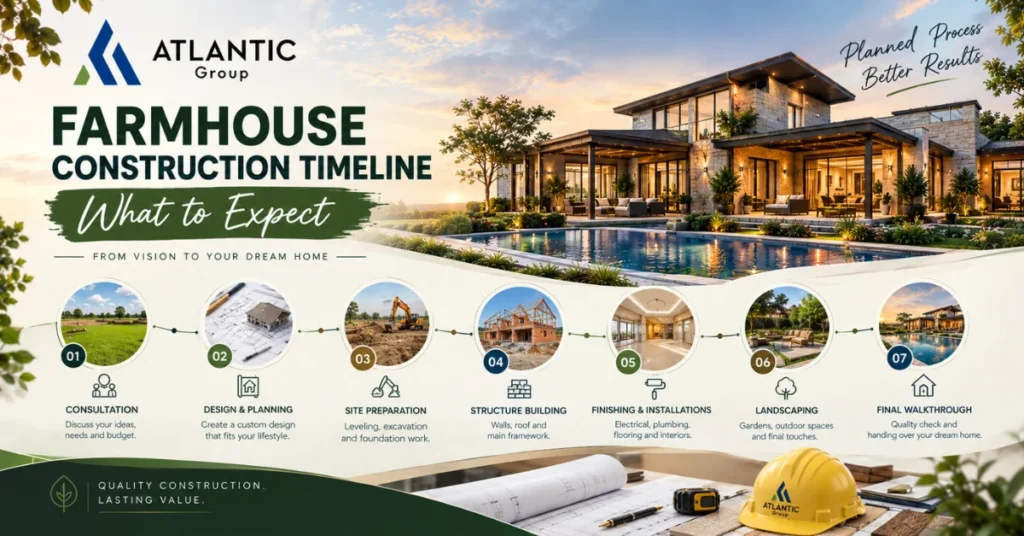
Before any construction starts, expect several weeks dedicated to finalizing architectural and structural drawings, followed by the approval process itself. This is the stage where your decisions have the most influence on the rest of the timeline — every change requested here is nearly free in terms of time, while the same change requested once construction has started can add weeks. Property owners should expect to be actively involved during this phase, reviewing drawings and confirming material specifications, rather than waiting passively for construction to begin.
What to Expect During Foundation and Grey Structure
This is typically the longest single stretch of the project, and also the stage where progress can look deceptively slow from the outside — a lot of the work, like reinforcement and curing time, isn’t visually dramatic even though it’s structurally critical. Site visits during this phase are worth prioritizing, since it’s far easier to confirm foundation and structural work matches the approved drawings while it’s still exposed than after it’s covered by later phases.
What to Expect During Roofing and MEP Rough-In
Once the grey structure is complete, roofing and the rough-in of electrical and plumbing systems typically move faster, since much of this work follows a more predictable sequence. This is also the stage where the farmhouse’s actual proportions become visible for the first time, which is often when property owners start feeling real momentum in the project after what can feel like a slower structural phase.
What to Expect During Finishing
Finishing is usually the longest phase in terms of decisions required, even when it isn’t the longest in raw duration. Flooring, fixtures, paint, and built-in elements all involve choices, and delays here are more often caused by decision delays on the client side than by the construction team. Property owners who prepare material and finish decisions in advance, rather than choosing as each stage arrives, consistently move through this phase faster.
How Weather and Season Affect Your Timeline
Lahore’s construction calendar is shaped significantly by the monsoon season, which typically runs from July through September. Starting foundation and grey structure work before monsoon season begins generally keeps this critical phase moving without weather-related interruptions, while finishing work is less weather-sensitive and can proceed through most of the year. Property owners planning a start date have more flexibility than they might assume, but timing the earliest, most weather-exposed phases around the monsoon window is one of the simplest ways to protect your overall schedule.
Questions to Ask to Keep Your Timeline on Track
A few direct questions, asked early, help keep expectations aligned throughout the project: what specifically could extend the estimated timeline, how will you be updated if a delay occurs, which decisions do you need to make before each phase begins, and how are weather-related delays typically handled in the schedule. For a closer look at how payment milestones tie into these same stages, our earlier guide on farm house construction companies covers the practical, contract-side details that usually accompany a realistic timeline.
Conclusion
A realistic farmhouse construction timeline isn’t really about predicting an exact number of weeks — it’s about understanding what drives that number up or down, and knowing what to expect at each stage so progress feels transparent rather than uncertain. Property owners who go in with accurate expectations, informed by plot size, design complexity, and seasonal timing, consistently have a smoother experience than those working from a generic estimate. Atlantic Group builds this expectation-setting into the earliest project conversations, well before construction begins.
📞 Call Us Today: 03054500053
FAQs
How long does a typical farmhouse construction project take overall?
Most projects run between 8 and 16 months from finalized drawings through handover, depending largely on size and design complexity.
Which stage of construction usually takes the longest?
Foundation and grey structure typically take the longest in raw duration, while finishing often takes the longest in terms of decisions required from the property owner.
Should I avoid starting construction during monsoon season?
Starting foundation work before monsoon season begins generally helps avoid weather-related delays during the most schedule-sensitive early phase.
What causes the most unexpected timeline extensions?
Late material decisions during the finishing phase and mid-construction design changes are among the most common causes of timelines running longer than expected.
How can I track whether my project is on schedule?
Regular site visits during the foundation and grey structure phases, paired with clear milestone check-ins from your construction team, are the most reliable way to track progress.
Does Atlantic Group provide a timeline estimate before construction begins?
Yes, we provide a stage-by-stage timeline estimate as part of the initial project planning, based on your specific plot and design.