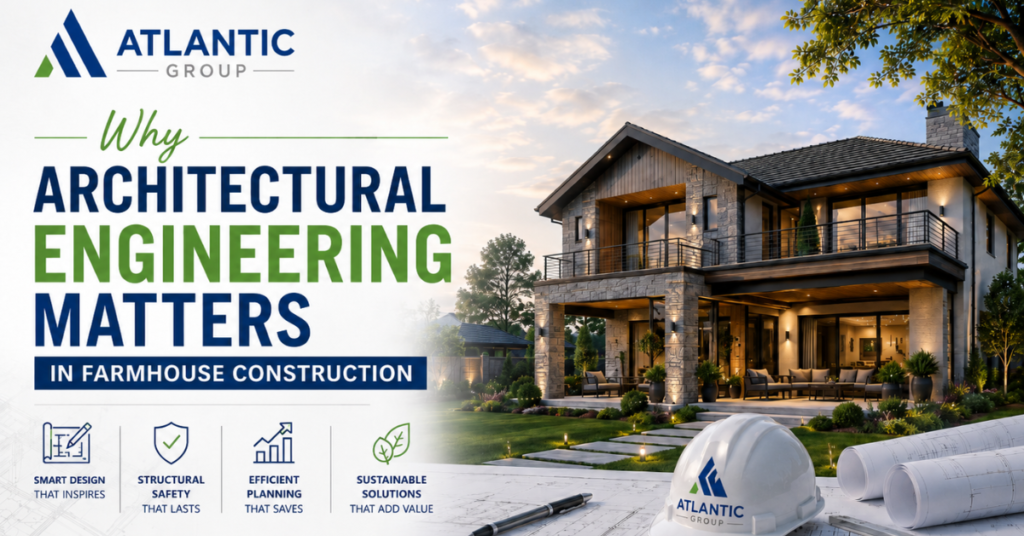
Modern farmhouse construction requires more than attractive architecture; it demands careful planning, structural efficiency, and long-term functionality. Architectural engineering plays a vital role in creating farmhouses that are safe, durable, energy-efficient, and visually appealing. From site analysis and space planning to structural design and utility integration, every engineering decision impacts the overall success of the project. Atlantic Group understands the importance of combining innovative architectural concepts with professional engineering expertise to deliver modern farmhouse developments that offer both luxury and lasting value. Proper engineering not only enhances construction quality but also minimizes future maintenance challenges and operational costs. As modern farmhouse trends continue to evolve, architectural engineering remains essential for creating comfortable, sustainable, and high-value residential environments.
Understanding Architectural Engineering in Farmhouse Projects
What Is Architectural Engineering?
Architectural engineering is a specialized discipline that combines architectural design principles with structural, mechanical, electrical, and construction engineering practices. In farmhouse projects, it ensures that every design element is both visually appealing and technically sound. While architects focus primarily on aesthetics and spatial planning, architectural engineers analyze structural performance, safety requirements, environmental conditions, and building functionality. This integrated approach creates farmhouses that are not only attractive but also durable and efficient, supported by extensive architectural engineering expertise.
How It Differs from Traditional Construction Planning
Traditional construction often focuses mainly on building execution, whereas architectural engineering begins much earlier in the project lifecycle. It involves detailed site evaluations, structural calculations, utility planning, and sustainability assessments before construction starts. This proactive planning reduces errors, improves coordination between different construction disciplines, and minimizes unexpected project complications.
Why Farmhouses Require Specialized Engineering
Farmhouses typically occupy larger plots and include diverse features such as outdoor entertainment areas, swimming pools, guest accommodations, landscaped gardens, and recreational facilities. These elements require careful engineering coordination to ensure safety, efficiency, and seamless integration. Specialized engineering also helps address unique challenges such as uneven terrain, drainage requirements, environmental exposure, and future expansion needs.
Structural Stability and Safety Planning
Structural stability is one of the most important reasons why architectural engineering matters in farmhouse construction. A visually impressive farmhouse cannot deliver long-term value if its structural framework is unable to withstand environmental pressures and daily operational demands. Architectural engineers carefully analyze soil conditions, load-bearing requirements, foundation specifications, and structural support systems before construction begins. These evaluations help determine the most suitable engineering solutions for each project site.
Modern farmhouse designs often feature large open spaces, expansive roofs, double-height ceilings, and outdoor extensions that require precise structural calculations. Engineering analysis ensures these elements remain safe and stable without compromising architectural aesthetics. Foundation design is particularly important because it directly affects the building’s ability to resist settlement, cracking, and long-term structural movement. Engineers also consider seismic activity, wind loads, and regional climate conditions when developing structural systems.
Space Planning and Functional Layout Design
Efficient space planning is one of the greatest benefits of architectural engineering in farmhouse construction. A well-designed layout improves comfort, functionality, and long-term usability while ensuring that every part of the property serves a meaningful purpose.
Key Elements of Effective Farmhouse Space Planning
- Strategic placement of bedrooms, living areas, and guest accommodations
- Smooth circulation between indoor and outdoor spaces
- Dedicated entertainment and recreational zones
- Privacy-focused layout planning for family members and guests
- Efficient kitchen and dining area positioning
- Functional utility and storage spaces
- Future expansion opportunities
- Improved accessibility and movement flow
- Better integration with landscape features
- Enhanced natural lighting and ventilation
Benefits of Professional Layout Engineering
- Maximizes available land utilization
- Reduces wasted construction space
- Improves day-to-day functionality
- Enhances comfort and convenience
- Supports modern farmhouse lifestyles
- Increases long-term property value
Architectural engineers analyze how residents will interact with different spaces throughout the property and develop layouts that improve both practicality and visual balance. Modern farmhouses increasingly emphasize open-plan living concepts, seamless indoor-outdoor transitions, and multifunctional spaces that adapt to changing family needs. Professional planning ensures these goals are achieved without compromising structural performance or construction efficiency.
Site Analysis and Land Utilization
Before any farmhouse construction begins, comprehensive site analysis is essential for understanding the opportunities and challenges presented by the property. Architectural engineering uses detailed site evaluations to guide design decisions and optimize land utilization. Soil testing, topographical assessments, drainage studies, and environmental evaluations provide valuable information that influences foundation design, building orientation, and infrastructure planning.
Soil Testing and Ground Conditions
Soil quality directly affects foundation stability and long-term structural performance. Engineers assess soil composition, bearing capacity, and moisture levels to determine appropriate foundation systems.
Topography Assessment
Understanding natural land contours helps optimize building placement while minimizing excavation costs and environmental disruption.
Drainage Planning
Proper drainage engineering prevents water accumulation, soil erosion, and foundation damage. Effective drainage systems also protect landscaped areas and outdoor amenities.
Orientation and Sunlight Utilization
Building orientation influences energy efficiency, indoor comfort, and natural lighting performance. Architectural engineers strategically position structures to maximize environmental benefits.
Access Road Planning
Safe and efficient access routes improve property functionality and support future development opportunities. Through careful site analysis, architectural engineering transforms raw land into a well-planned and highly functional farmhouse environment that supports both immediate needs and long-term growth.
Energy Efficiency and Sustainable Farmhouse Design
Modern farmhouse construction increasingly prioritizes sustainability because property owners seek homes that are environmentally responsible, cost-effective, and comfortable throughout the year. Architectural engineering plays a major role in achieving these objectives by integrating energy-efficient solutions into the design and construction process. A properly engineered farmhouse consumes less energy, reduces operational expenses, and provides a healthier living environment. Engineers carefully analyze climate conditions, building orientation, insulation requirements, and ventilation strategies to maximize efficiency. These considerations help reduce dependence on artificial cooling and heating systems while improving indoor comfort. Sustainable farmhouse design also supports long-term property value because environmentally conscious construction is becoming increasingly attractive to modern buyers. Through smart planning and innovative engineering solutions, farmhouses can achieve both luxury and sustainability without compromising aesthetics or functionality.
Natural Ventilation Systems
Natural ventilation strategies improve indoor air quality while reducing energy consumption. Proper window placement, cross-ventilation techniques, and airflow planning allow fresh air to circulate efficiently throughout the farmhouse.
Energy-Efficient Building Materials
Modern construction materials such as insulated wall systems, energy-efficient glazing, and thermal roofing solutions help regulate indoor temperatures and reduce utility costs.
Solar Energy Integration
Solar panels provide renewable energy that can significantly reduce electricity expenses while supporting sustainable living practices.
Rainwater Harvesting Systems
Rainwater collection and storage systems help conserve water resources and support irrigation, landscaping, and non-potable household uses.
Architectural Aesthetics and Visual Appeal
The visual appearance of a farmhouse significantly influences its overall value, desirability, and long-term market appeal. Architectural engineering helps transform design concepts into visually balanced structures that combine beauty with functionality. While aesthetics often focus on exterior appearance, engineering ensures that architectural features remain practical, structurally sound, and durable over time. Modern farmhouse architecture typically blends traditional rural charm with contemporary design elements, creating elegant properties that appeal to a wide range of homeowners.
Exterior elevation design is one of the most visible aspects of farmhouse architecture. Engineers work closely with designers to ensure that facades, rooflines, balconies, and decorative features maintain both visual harmony and structural integrity. Material selection also plays an important role in achieving desired aesthetic outcomes. Natural stone, wood textures, exposed concrete, and modern cladding systems are frequently used to create distinctive farmhouse appearances. Proper engineering ensures these materials perform effectively under varying environmental conditions.
Utility and Infrastructure Planning
A successful farmhouse depends on more than attractive architecture and strong structural systems. Proper utility and infrastructure planning ensures that all essential services operate efficiently and support daily living requirements. Architectural engineering coordinates electrical systems, plumbing networks, water storage facilities, sewage management solutions, and smart technology integration to create a fully functional living environment.
Key Infrastructure Components
- Electrical distribution systems
- Water supply and storage planning
- Plumbing and drainage networks
- Sewage treatment solutions
- Internet and communication systems
- Smart home automation infrastructure
- Backup power systems
- Security and surveillance integration
- Irrigation systems for landscaping
- Utility access and maintenance planning
Benefits of Professional Utility Engineering
- Improved operational efficiency
- Reduced maintenance requirements
- Better resource management
- Enhanced property functionality
- Increased long-term reliability
- Support for future technology upgrades
Proper infrastructure planning prevents many common construction and operational issues while improving the overall performance and convenience of the farmhouse.
Outdoor Spaces and Landscape Engineering
farmhouse properties. Architectural engineering helps transform open land into functional, attractive, and highly usable outdoor spaces that complement the main residence. Landscape engineering focuses on creating environments that support recreation, relaxation, entertainment, and visual appeal while maintaining practical functionality.
Well-designed outdoor spaces typically include landscaped gardens, swimming pools, outdoor seating areas, walking paths, and entertainment zones. Engineers carefully coordinate grading, drainage, irrigation systems, and utility connections to ensure these features operate effectively over time. Proper planning also prevents common problems such as soil erosion, water accumulation, and landscape deterioration. Professional farmhouse landscaping solutions further enhance the usability, aesthetics, and long-term value of outdoor environments.
Common Construction Problems Without Proper Engineering
Many construction challenges can be traced back to inadequate planning and insufficient engineering involvement during the early stages of a project. Architectural engineering helps identify potential risks before construction begins, reducing the likelihood of expensive repairs and operational problems later.
Structural Cracks and Settlement Issues
Poor foundation planning and inadequate soil analysis often result in structural movement, wall cracks, and long-term stability concerns.
Poor Drainage and Water Damage
Improper drainage design can lead to water accumulation, foundation deterioration, landscape damage, and increased maintenance costs.
Inefficient Space Utilization
Weak layout planning frequently creates underutilized areas, circulation problems, and reduced functionality throughout the property.
High Maintenance Costs
Construction mistakes and low-quality planning often increase maintenance requirements and long-term ownership expenses.
Practical Solutions
- Professional architectural engineering consultation
- Detailed site analysis and soil testing
- Accurate structural calculations
- Integrated utility planning
- Sustainable design strategies
- Comprehensive project management
Addressing these issues during the planning phase helps ensure smoother construction processes and better long-term property performance.
Farmhouse Construction With vs Without Architectural Engineering
| Factor | With Architectural Engineering | Without Proper Engineering |
| Structural Stability | High | Moderate to Low |
| Space Efficiency | Optimized | Often Inefficient |
| Cost Control | Better Managed | Frequent Overruns |
| Energy Efficiency | Improved | Limited |
| Maintenance Requirements | Lower | Higher |
| Drainage Performance | Well Planned | Problem-Prone |
| Property Value | Higher | Lower |
| Future Expansion | Easier | More Difficult |
| Construction Quality | Consistent | Variable |
| Long-Term Durability | Excellent | Uncertain |
Impact on Property Value and Investment Returns
Architectural engineering significantly influences the financial performance of farmhouse investments. Properties that are professionally planned and engineered typically achieve higher resale values because buyers recognize the benefits of superior construction quality, functional layouts, and long-term durability. Well-engineered farmhouses also experience fewer maintenance issues, reducing ownership costs and preserving property conditions over time.
Modern buyers increasingly prioritize energy efficiency, sustainability, and intelligent space planning when evaluating real estate opportunities. Farmhouses that incorporate these features often command premium market prices and attract stronger buyer interest. Additionally, professional engineering improves adaptability, allowing properties to accommodate future upgrades and changing lifestyle requirements more effectively.
Choosing the Right Architectural Engineering Partner
Selecting the right architectural engineering partner is one of the most important decisions in any farmhouse construction project. Even the best design ideas can fail to achieve their full potential if they are not supported by professional engineering expertise and effective project management. An experienced engineering team helps transform concepts into practical, durable, and aesthetically appealing structures while ensuring compliance with safety standards and construction regulations. Their involvement also improves coordination between architects, contractors, and specialized consultants, resulting in smoother project execution and better quality control.
Experience and Portfolio Evaluation
Before hiring an engineering company, property owners should carefully review previous projects and evaluate experience in farmhouse construction. A strong portfolio demonstrates technical capability, design versatility, and successful project delivery. Reviewing completed projects also helps determine whether the company can handle the specific requirements of luxury farmhouse developments.
Engineering and Design Expertise
Professional engineering teams should possess expertise in structural planning, utility design, site analysis, sustainability strategies, and architectural coordination. This multidisciplinary knowledge ensures every component of the farmhouse functions efficiently and contributes to long-term performance.
Project Management Capabilities
Effective project management is essential for maintaining schedules, controlling budgets, and ensuring construction quality. Experienced engineering professionals coordinate multiple stakeholders and resolve technical challenges before they become costly problems.
Quality Assurance Standards
Strong quality assurance procedures help maintain construction accuracy, material performance, and safety compliance throughout the project lifecycle. Professional oversight significantly reduces the risk of defects and costly repairs.
Read more: How Farmhouse Architectural Services Increase Property Value?
Conclusion
Architectural engineering is a key factor in creating farmhouses that are structurally strong, visually appealing, and highly functional. From planning and design to construction and long-term performance, professional engineering helps ensure every element works efficiently. Atlantic Group emphasizes the importance of integrating architectural expertise with modern construction practices to deliver farmhouse developments that offer lasting comfort, sustainability, and investment value. Proper engineering also helps optimize space utilization, improve energy efficiency, and minimize future maintenance requirements. As modern farmhouse trends continue to evolve, strategic planning and engineering remain essential for achieving successful and high-value residential projects.
FAQs
What is architectural engineering in farmhouse construction?
Architectural engineering combines architectural design with structural, mechanical, electrical, and construction engineering principles to ensure a farmhouse is safe, functional, efficient, and visually appealing.
Why is architectural engineering important for farmhouse projects?
Architectural engineering helps improve structural stability, optimize space utilization, reduce construction risks, enhance energy efficiency, and increase long-term property value.
How does architectural engineering improve farmhouse design?
It ensures that aesthetic features work effectively with structural systems, utility networks, environmental conditions, and functional layout requirements.
Can architectural engineering reduce construction costs?
Yes. Proper planning minimizes design errors, reduces material wastage, prevents costly modifications, and improves overall project management efficiency.
What role does site analysis play in farmhouse construction?
Site analysis evaluates soil conditions, drainage requirements, topography, environmental factors, and land utilization opportunities to support informed design and engineering decisions.